
Involving disabled people in designing tech that transforms lives
 A new report is urging tech firms, governments and researchers to break down barriers in assistive technology.
A groundbreaking new report by the Royal Society has called for a radical shift in how digital assistive technologies are designed, urging that disabled people must be central to the process if tech is to truly transform lives.
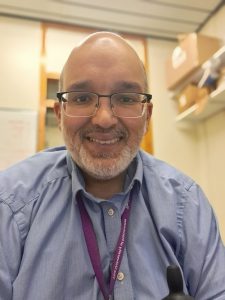
Dr Hamied Haroon, a Research Fellow at The University of Manchester and prominent advocate for disability inclusion in science, played a key role in shaping the Disability Technology report released by the Royal Society, the UK’s national academy of sciences.
As a member of the Royal Society Diversity and Inclusion Committee’s Disabled Scientists Subgroup, Dr Haroon brought both scientific expertise and lived experience to the project. He says the message is clear: “We shouldn’t be developing assistive technologies or policies without disabled people being front and centre of the process. How do you capture the day-to-day challenges faced by disabled people, or ensure you’re offering solutions that actually work, unless you talk to disabled people?”
The report highlights the critical role digital assistive technologies (or digital AT), such as screen readers, speech recognition, and smartphone navigation apps, play in enabling 1.3 billion disabled people worldwide to live independent, fulfilling lives. But it warns that systemic barriers still block access for too many.
More than half of disabled users surveyed said they couldn’t live the way they do without such tools, yet high costs, poor infrastructure, and limited training keep many locked out.
Dr Haroon stresses that this isn’t just about better technology, it’s about equity: “These assistive technologies are fundamental to the workplace and our daily tasks, but they can be prohibitively expensive or unusable in some settings. We need to remove those barriers, whether that’s financial, technical, or societal.”
The report recommends:
- Recognising smartphones as assistive technologies, alongside wheelchairs and hearing aids.
- Improving training, funding, and support to make digital AT more accessible.
- Expanding infrastructure like mobile data networks in rural and low-income areas.
- Collecting more meaningful data on everyday functional challenges, rather than relying solely on self-identified disability.
Sir Bernard Silverman FRS, Chair of the report’s Steering Committee, said that better data is critical to ensuring technology meets real needs: “In the AI age, the way we record and understand disability shapes everything – from research to public services.”
For Dr Haroon and the report’s authors, the goal is transformation not just in technology, but in who gets to shape it.
“This is about ensuring that the people who rely most on assistive technology aren’t just end users—they’re co-creators,” Dr Haroon said. “That’s how we build a world that works for everyone.”
- Watch the video for a fantastic summary.