Advancing cross-border innovation in cancer detection
 Oesophageal cancer is often diagnosed too late for effective treatment, particularly in underserved communities. A featured story in The University of Manchester’s Research impact, shaped together campaign shows how an international partnership is helping change that — improving early detection, strengthening local health systems and widening access to care.
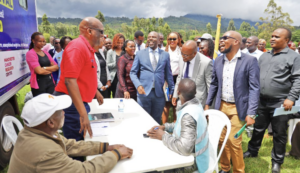
Working with clinicians, community health workers and government partners in Kenya, the University helped co-design a mobile screening model to detect oesophageal cancer earlier. Rather than applying a model designed elsewhere, the project was built around shared ownership and local knowledge. Community health workers helped shape how cancer was discussed, tackling fear, stigma and practical barriers that can prevent people from coming forward for screening. A Train-the-Trainer approach also helped Kenyan clinicians and pathologists build expertise and pass it on locally, supporting longer-term capacity. The partnership has now trained hundreds of health workers, reached five Kenyan counties and screened thousands of people.
The impact of the partnership also reaches beyond Kenya. Insights from this work are now helping shape approaches to early detection in Greater Manchester’s Black communities, showing how global collaboration can improve health both internationally and closer to home.
Learn more:
- Read the full case study and watch the accompanying film here: https://www.manchester.ac.uk/research/impact/shaped-together/cancer-detection-innovation/