
What happens when local voices shape global challenges?
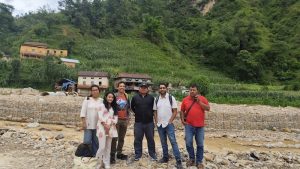 Ideas at Work explores how research from the University’s Faculty of Humanities creates change in the world around us. This example follows how research on disaster recovery and scholar activism is helping shape conversations, policy and support for those experiencing hardship.
Disaster governance raises questions about whose voices shape recovery. Dr Nimesh Dhungana is a senior lecturer in disasters and global health in the University’s Humanitarian Conflict Response Institute. His research seeks to make governance more inclusive and accountable by strengthening civil society’s role and exploring how grassroots activism can influence policy.
Focusing on Nepal, the study examined how communities, activists and campaign groups responded to the 2015 earthquakes, COVID-19 and the 2024 floods. Through long-term research, Dr Dhungana identified barriers to local influence and explored ways to improve accountability, participation and fairness in recovery and reconstruction. The premise is that rights-based policies shaped by affected people are more effective and equitable.
Long-standing partnerships with activists and community organisations helped shape the research from within. Ethnographic observation, collaborative workshops and community discussions documented lived experiences of disaster and recovery. Findings informed the Just Recovery framework, which centres social justice and local voices in rebuilding. The learning became relevant beyond Nepal, to Liberia, Pakistan, and South Africa.
The project connected researchers with civil society groups, policymakers and disaster-affected communities, including Accountability Lab, which supports local changemakers developing governance solutions, and its activist network.
From research to impact:
- Research and evidence: Worked with communities affected by earthquakes, floods and COVID-19 to identify barriers to participation and accountability.
- Knowledge exchange: Researchers, activists and practitioners co-produced evidence and the Just Recovery framework through workshops, discussions and policy roundtables.
- Advocacy and practice: Accountability Lab and its partners used the research to promote inclusive, rights-based recovery and governance.
- Wider influence: Findings informed discussions with Nepalese policymakers and practitioners; international partners are sharing lessons in Liberia, Pakistan and South Africa.
Find out more: