Gender-inclusive education law successfully reformed in Mexico
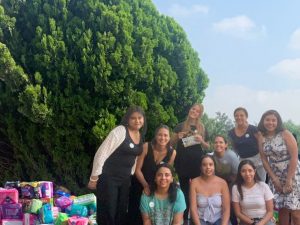 A University of Manchester graduate, now working as a Policy Specialist at the Central Bank of Ireland, has been volunteering at at Organización para Chicas A.C. (OPC) as as Public and International Relations Coordinator. Since 2023, they have been leading a bold proposal to reform education law in Mexico.
The Law of Education for the State of San Luis Potosí has now been amended to embed a gender perspective throughout the curriculum – an achievement that marks a major step forward for better health, social inclusion and equity in education across the region.
This landmark reform is particularly special to the University community, as its foundations were rooted in the master’s dissertation of Elisa Soto, a University of Manchester alumna whose academic work became the backbone of the legislative proposal. Its successful realisation was also made possible thanks to the OPC’s team, whose members dedicated their hard work, time, and commitment, each playing a vital role in turning the proposal into reality.
While the reform did not directly incorporate menstrual or sexual health education, embedding a gender perspective lays the groundwork for future amendments to include these vital topics. Key amendments include:
Article 10: Schools must now foster holistic well‑being by recognising the right to menstrual education for girls, women and all who menstruate—opening the door for future curricular content on menstrual health.
Article 13: Education goals now explicitly call for the prevention of gender‑based discrimination, setting a precedent for introducing comprehensive sexual health education in years to come.
Article 44: Inclusive education provisions now require actions that support emotional and social well‑being from a rights‑based gender perspective, creating the basis for more targeted reproductive health teaching.
Article 59: Curriculum development must consider puberty, menstruation and other aspects of reproductive health—establishing a framework that can be expanded to deliver full menstrual and sexual health programmes.
These changes align with the principles of Menstruación Digna and are a testament to what can be achieved through civic advocacy and university‑driven partnerships.
The ripple effects of this work also caught the attention of another University of Manchester graduate, Angelik Nehme, who featured OPC in a special piece for The Conference Corner, an international publication dedicated to spotlighting impactful global initiatives. In her article, Angelik explored how OPC’s mission intersects with broader issues such as sustainability and environmental justice.
Through her detailed reporting, Angelik highlighted how OPC not only advocates for education reform but also champions environmental awareness by promoting access to sustainable menstrual products and educating young people on their environmental impact. By addressing menstrual health through a lens of climate justice, OPC is helping reduce waste associated with disposable menstrual products and advocating for policies that prioritise both health and sustainability.
Adding to their recent accomplishments, Organización para Chicas has also been nominated for the UNESCO Prize for Girls’ and Women’s Education, which honours projects making outstanding contributions to female education worldwide.
This reform shows what’s possible when taboo topics are addressed openly, and action is taken to support future generations. We invite readers to follow our journey, share what resonates, and speak up—because silence allows stigma to persist.
For more information:
- Find out more about OPC
- Join the conversation on Instagram at @organizacion_para_chicas
- Interested in contributing to this cause? OPC is always open to new volunteers, partnerships and supporters.