
Iftar at the Museum
 “What difference does an Iftar at the museum make?”
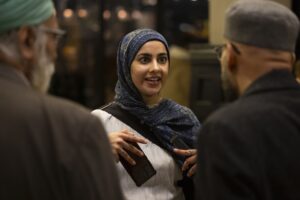
On 12 March, Manchester Museum answered that question, as communities, staff and partners gathered to share an evening that brought people together across faiths and cultures.
As the sun set during the holy month of Ramadan, the Museum’s fifth annual Iftar welcomed guests of all faiths and none to experience the spirit of compassion and reflection that defines the month. Delivered in partnership with the British Muslim Heritage Centre, the evening created space not only to break the fast together but also to learn, listen and connect.
Community speakers reflected on the significance of Ramadan, including Mohammed Ullah, the University’s Muslim Chaplain; Nusrat Ahmed, Lead Curator of Manchester Museum’s South Asia Gallery; Irfan Ashraf, CEO of the British Muslim Heritage Centre; and Shaykh Bilal Brown. Guests also had the opportunity to observe the Muslim call to prayer, and to learn more about the diversity and global reach of Muslim traditions through items and archives from the Museum’s collections connected with Islamic histories and cultures. At sunset, the gathering came together to open the fast and share food.
The Museum worked with the University’s Muslim Chaplain, Mohammed Ullah, to develop its first Iftar in 2019, during a period of rising Islamophobia in Manchester. Since then, it has grown into an important annual moment of connection and dialogue.
“So, what difference does an Iftar at the museum make? In a world filled with division, war and the constant noise of social media, choosing to come together is not a small thing. It is a powerful thing. So tonight isn’t just about breaking a fast. It’s about refusing to let division define us. And as long as we keep opening doors, building bridges, and sharing table like this – hope will always be louder than hate.” said Mohammed Ullah. Muslim Chaplain, The University of Manchester.
The Iftar is a part of the Manchester Museum Celebrates programme, developed over the past six years with charities, faith organisations and community activists. Events, including Lunar New Year, Vaisakhi, Africa Day and Diwali bring communities together to share traditions and build understanding.
- Find out more about upcoming events.