
Making it last: How repair culture is transforming sustainable fashion
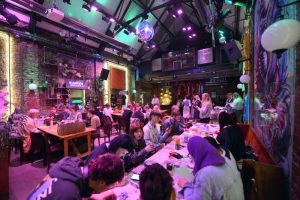 At the recent ESRC Festival of Social Science, The Making Room Fair demonstrated that environmental sustainability often begins with the simplest of actions: repairing what we already own. The event was led by Tetyana Solovey, Researcher in the department of Sociology at the University of Manchester.
The overproduction of clothing is a major driver of environmental harm and social inequality, contributing to carbon emissions, overflowing landfills, and exploitative labour conditions (Holroyd, 2025). While systemic change is essential, many consumers feel overwhelmed by the scale of the problem. Reuse, however, offers a practical and enjoyable way to make a difference. Practices such as mending, making, and remaking can significantly reduce our reliance on resource‑intensive fast fashion.
The Fair grew out of The Making Room project, a community “micro‑factory” dedicated to ethical, small‑scale production and creative reuse. Held at The Yard in Manchester, the six‑hour event brought together makers, students, artists, and attendees across Greater Manchester to explore hands-on techniques for extending the life of clothing.
Across the venue, more than 120 participants experimented with mending, stitching, upcycling, and textile printing. They discovered creative ways to give new life to existing garments, embracing a mindset that values longevity over novelty. Many attendees arrived with little or no sewing experience yet left with renewed confidence and garments they had transformed themselves. The event showed how accessible repair culture can be when people are given the space, tools, and encouragement to try.