
Manchester Museum hosts memorial event for Bengal Famine
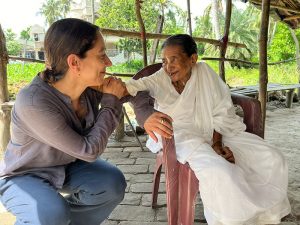 In October, Manchester Museum hosted a moving event to remember the three million lives lost in the Bengal Famine of 1943, one of the largest civilian losses on the Allied side during the Second World War.
For decades, this tragedy, affecting British subjects in Bengal, has been largely absent from public memory. The memorial event, believed to be the first of its kind, offered a space to confront that silence and honour the lives lost.
Anindita Ghosh, Professor of Modern Indian History at The University of Manchester and Nusrat Ahmed, Curator of Manchester Museum’s South Asia Gallery, were joined by journalist Kavita Puri, creator of the landmark BBC podcast Three Million.
Together they reflected on those who lost their lives, shared stories from eyewitnesses, introduced performances on the resonance today and discussed the continuing legacy of war and starvation.
A temporary display presented survivor testimonies, letters written by Indian soldiers to their families and Japanese propaganda pamphlets showing images of the famine. In the South Asia Gallery, excerpts from the documentary Bengal Shadows were projected, offering visual context for the events of 1943.
Together, the two spaces created a setting where visitors could engage with the historical context and the human experience, creating a fitting memorial for a forgotten tragedy.