
How community placements are shaping future doctors at Manchester
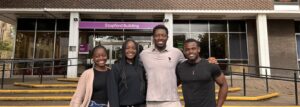 Students training to be doctors through the Manchester Medicine MBChB course are undertaking service learning placements within communities to both develop their skills and better understand the people they will one day serve.
For second-year students at The University of Manchester, service learning placements provide an opportunity to develop their professional skills beyond traditional healthcare settings.
Initially run as a pilot programme, the half-day team placement is now a mandatory part of the MBChB curriculum, connecting students with partners including hospices, food banks, third sector organisations, domestic abuse charities and more.
Designed as an experiential learning opportunity, this placement helps students explore health inequalities, community support and multidisciplinary care while applying skills learned in teaching sessions.
Connecting with local communities in Manchester
The African Caribbean Care Group (ACCG) is a community charity that predominantly supports elderly African and Caribbean communities through culturally appropriate services.
Alongside exercise classes and shared meals that provide opportunities for socialising, the organisation offers food delivery services, wellbeing activities and practical support for the local community. For medical students, the placement provides valuable insights into how community organisations help people to thrive rather than just survive.
Before attending their placement, students undertake preparatory learning through videos and written resources, introducing them to the organisation, its users and the wider context of community-based healthcare. During the placement, students meet service users and take part in activities that develop their communication skills, while broadening their understanding of the wider social factors that influence health.
Students Meuke Cheta, Carl Kulimushi, Elisha Goma Moukala and Farrah Adegunle (pictured) worked collaboratively with the ACCG to develop educational resources focusing on sickle cell disease, a condition that disproportionately affects people of African and Caribbean heritage.
After researching the condition and available support services, the students created an accessible educational poster to raise awareness, explain symptoms and signpost users to more information and support.
This task allowed students to apply their developing medical knowledge to a real-world community need while creating a highly beneficial resource for ACCG’s members and service users.
Feedback gathered from community partners following placements demonstrated the value of student involvement.
ACCG said it appreciated the support students provided in researching sickle cell disease and identifying information and resources that could be shared with service users.
At the same time, the placement successfully introduced students to the wide network of community organisations that support patients outside of hospital settings – knowledge that they recognised would be invaluable to their future clinical practice.
Reflecting on the experience, student Meuke said: “It really prepares you to be able to adapt your communication skills… ensuring that the information was appropriate to their understanding and culturally appropriate, as well.”
Placement academic lead Dr Omodunni Adeniyi emphasises the value of introducing service learning opportunities early in medical education, helping students develop empathy, cultural awareness and a deeper understanding of the wider factors that shape people’s lives.
Drawing on her experience as a GP, lifestyle medicine doctor, and Sustainability and Health Inequalities Lead for the Royal College of General Practitioners North West Faculty, Dr Adeniyi explains the importance of students seeing community support in action.
By understanding how services outside traditional ‘healthcare’ settings of hospitals and GP practices help individuals and families, students are better prepared to deliver person-centred care in their future careers.