
Modern Slavery and Our Responsibility at the University of Manchester
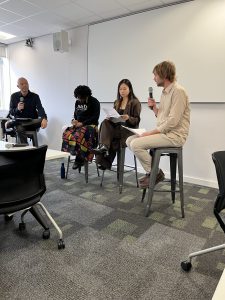 As part of Anti-Slavery Week, 12-18 October, colleagues and external experts came together to explore the connections between slavery in both its historical and modern forms, and the role universities can and should play in addressing its legacies and ongoing exploitation.
Opening the discussion, Dr Julian Skyrme, Executive Director of Social Responsibility and Civic Engagement, reflected on how slavery can often be viewed as something that happened elsewhere and ended long ago. Yet the legacies of transatlantic slavery continue to shape societies, economies and institutions today, while modern slavery remains a global challenge affecting tens of millions of people. He highlighted the University’s ongoing work to understand and engage with its own historical connections to transatlantic slavery.
Keisha Thompson, Programme Manager at The Guardian, examined Manchester’s historical connections to transatlantic slavery and the city’s role within the cotton economy that fuelled its industrial boom. She discussed how wealth generated through slavery has had lasting impacts on societal inequalities stretching to the present day. Referencing The Guardian’s Legacies of Enslavement project, she highlighted how institutions are increasingly confronting these histories and considering their responsibilities in responding to them. The responsibility universities hold, she stressed, is “not [about] quantifying harm, it’s about resourcing repair”. This approach comes from an understanding that universities, through their education and research output, continue to shape society and public understanding and therefore have a huge duty to acknowledge slavery and facilitate the redistribution of power.
The discussion then turned to the realities of modern slavery. Britta Lam, Global Philanthropy Strategy and Data Lead at Hope for Justice, explained that modern slavery can take many forms, including human trafficking, forced marriage, domestic servitude, forced labour and sexual exploitation. She emphasised the global scale of the issue: around 50 million people worldwide are estimated to be living in modern slavery, with approximately 22 million in forced marriages and 28 million in forced labour. She explained that vulnerability to exploitation is often driven by a combination of life circumstances, such as financial hardship, family pressures or employment insecurity, making modern slavery a risk that is much closer to everyday life than many people realise.
Britta also discussed the challenges posed by global supply chains, where exploitation can be hidden within complex networks of producers, manufacturers and suppliers. While fully tracing supply chains can be difficult, she encouraged organisations and consumers alike to continually improve their understanding of where risks may exist, challenging everyone to be “better today than yesterday, and better tomorrow than they are today”.
Representing the University’s commercial procurement team, Tom Cookson, Senior Category Manager, explored how higher education institutions can help address modern slavery through responsible purchasing and supplier management. Universities operate large and complex supply chains, covering areas such as construction, cleaning, catering, security and technology, where labour exploitation risks can occur. He outlined the University’s approach, which includes supplier assessments, contractual requirements, training and collaboration with external partners such as Slave-Free Alliance to strengthen oversight and improve practice. The University also maintains a dedicated anti-slavery governance structure and publishes an annual Modern Slavery Statement setting out its risks and actions.
A recurring theme throughout the discussion was the importance of moving beyond awareness to action. Speakers stressed that recognising the signs of modern slavery is only the first step; institutions must embed that awareness into their decision-making, policies and everyday practices. Universities, with their roles as educators, employers, researchers and purchasers, are uniquely placed to help raise awareness, prevent exploitation and bolster positive change.
As Anti-Slavery Week encourages reflection on both historical and contemporary forms of exploitation, the event highlighted the shared responsibility of institutions and individuals alike. By understanding the legacy of slavery, examining current systems and taking practical steps to address exploitation, universities can play an important role in building a fairer and more equitable future.
- Watch the event recording
- Check out the University’s StaffNet page on modern slavery and responsible procurement